
Jobs That Offer Relocation Assistance Pay You to Start Fresh Anywhere - Relocation
AI Workers Are the New Expats: Where Tech’s Hottest Talent Is Landing - Relocation
How to Find a Job in Miami and Thrive in the Sunshine State - Relocation
Athletic Trainers Relocation - Athletics
Doctor Relocation Timeline From Offer Letter to Hospital Onboarding - Medical
Top Cities for Female Physicians to Practice in the United States - Medical
Easy Relocation for Physicians - Medical
The Best Cities for Registered Nurses: Where Pay Meets Possibility - Medical
How Relocation Packages for Nurses Support Long-Term Career Moves - Medical
Relocating as a Traveling Nurse - Medical
10 Best Neobanks in the US That Fit Modern Financial Habits - Personal Finance
Corporate Credit Card vs. Business Credit Card: Which Option Is Appropriate for Business - Finance
Jobs That Offer Relocation Assistance Pay You to Start Fresh Anywhere - Relocation
AI Workers Are the New Expats: Where Tech’s Hottest Talent Is Landing - Relocation
How to Find a Job in Miami and Thrive in the Sunshine State - Relocation
Athletic Trainers Relocation - Athletics & Sports
Doctor Relocation Timeline From Offer Letter to Hospital Onboarding - Medical
Top Cities for Female Physicians to Practice in the United States - Medical
Easy Relocation for Physicians - Medical
The Best Cities for Registered Nurses: Where Pay Meets Possibility - Medical
How Relocation Packages for Nurses Support Long-Term Career Moves - Medical
Relocating as a Traveling Nurse - Medical
10 Best Neobanks in the US That Fit Modern Financial Habits - Personal Finance
Corporate Credit Card vs. Business Credit Card: Which Option Is Appropriate for Business - Finance
Jobs That Offer Relocation Assistance Pay You to Start Fresh Anywhere - Relocation
AI Workers Are the New Expats: Where Tech’s Hottest Talent Is Landing - Relocation
How to Find a Job in Miami and Thrive in the Sunshine State - Relocation
Athletic Trainers Relocation - Athletics & Sports
Doctor Relocation Timeline From Offer Letter to Hospital Onboarding - Medical
Top Cities for Female Physicians to Practice in the United States - Medical
Easy Relocation for Physicians - Medical
The Best Cities for Registered Nurses: Where Pay Meets Possibility - Medical
How Relocation Packages for Nurses Support Long-Term Career Moves - Medical
Relocating as a Traveling Nurse - Medical
10 Best Neobanks in the US That Fit Modern Financial Habits - Personal Finance
Corporate Credit Card vs. Business Credit Card: Which Option Is Appropriate for Business - Finance
Jobs That Offer Relocation Assistance Pay You to Start Fresh Anywhere - Relocation
AI Workers Are the New Expats: Where Tech’s Hottest Talent Is Landing - Relocation
How to Find a Job in Miami and Thrive in the Sunshine State - Relocation
Athletic Trainers Relocation - Athletics & Sports
Doctor Relocation Timeline From Offer Letter to Hospital Onboarding - Medical
Top Cities for Female Physicians to Practice in the United States - Medical
Easy Relocation for Physicians - Medical
The Best Cities for Registered Nurses: Where Pay Meets Possibility - Medical
How Relocation Packages for Nurses Support Long-Term Career Moves - Medical
Relocating as a Traveling Nurse - Medical
10 Best Neobanks in the US That Fit Modern Financial Habits - Personal Finance
Corporate Credit Card vs. Business Credit Card: Which Option Is Appropriate for Business - Finance


Airport lounges were supposed to be the escape. That was the whole promise of airport lounge access. You paid for a premium credit card, airline status, or a better cabin, and the airport suddenly became less painful. Instead of standing shoulder-to-shoulder at the gate, you could grab coffee, open your laptop, take a call, feed the kids, or simply sit somewhere that did not feel like a crowded hallway.
But in many U.S. airports, that promise is starting to crack.
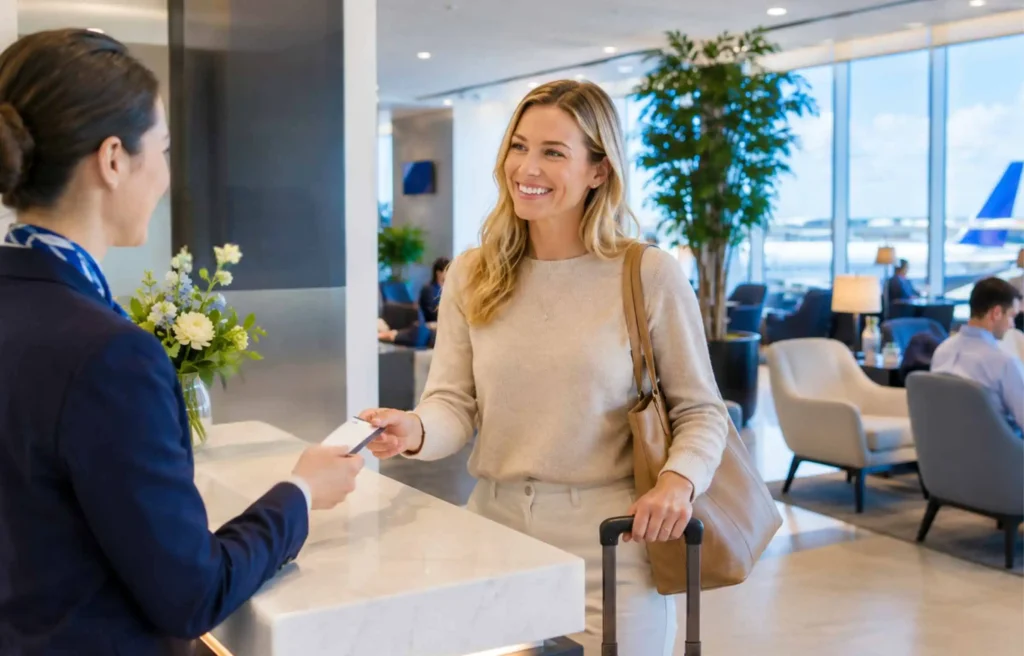
The lounge is no longer always quiet. It is not always easy to enter. In some terminals, the line outside the lounge now looks suspiciously similar to the boarding line travelers were trying to avoid. The airport lounge has become the new boarding gate, only with a higher price tag.
That shift matters for business travelers, families, remote workers, and anyone planning a move that involves repeated airport trips. For people dealing with employee relocation services, airport comfort is no longer a small perk. It can shape how exhausting a move feels from the first flight.
The Lounge Boom Worked Too Well
U.S. airport lounges used to serve a narrower audience. Frequent flyers, international premium-cabin passengers, paid lounge members, and top-tier loyalists made up most of the room.

THE RELO.AI DAILY NEWSLETTER
Daily Digest of Relocation News, Deals & Reviews
Subscribe for free and get proven relocation and travel strategies, personalized support, valuable rewards, and trusted reviews for every move.
Thank you for subscribing!
Your email has been added to our list.
Then, premium credit cards changed the math.
Suddenly, lounge access became one of the easiest benefits to understand. Travelers might ignore points transfer ratios or hotel credits, but they understood free food, cleaner bathrooms, Wi-Fi, and a quieter seat before departure.
That made lounge access powerful marketing.
It also made the lounges crowded.
The demand is not surprising. U.S. airports are busy, and the passenger volume keeps pressure on every part of the travel day. TSA’s official checkpoint travel numbers show how many people are moving through security on any given day. When millions of passengers are flowing through airports, even a small percentage trying to enter lounges can overwhelm the limited square footage.
This is why travelers now see waitlists, capacity signs, time limits, and stricter entry checks around airport lounge access. The benefit still exists, but the experience has changed.
For anyone planning repeated flights before or after a move, this creates a new layer of travel planning. Airport access, transfer timing, and lounge reliability now belong in the same conversation as housing and moving costs. That is especially true for people using relocation assistance services to manage a stressful transition.
Related – How to Get Access to Airport Lounge for Free
Credit Cards Turned Lounges Into a Mass-Market Perk
Premium travel cards turned airport lounges into something close to mainstream.
That is not necessarily bad. A traveler paying a large annual fee should expect meaningful benefits. A family moving across the country might genuinely value lounge access between flights. A consultant flying weekly may need a reliable place to work. A remote employee taking scouting trips before choosing a new city may treat lounge access as part of the travel budget.
The problem is that card issuers sold access faster than airports could build space.
Capital One, American Express, Chase, and other issuers now operate or support lounge networks that compete with airline lounges. Their official access pages show how detailed the rules have become. Capital One publishes its airport lounge access information, Amex explains Centurion Lounge access rules, and Chase outlines its Sapphire Lounge access policies.
Those pages matter because lounge access is no longer a simple yes-or-no perk. It depends on the card, guest type, flight timing, capacity, authorized-user status, and sometimes annual spending.
That complexity creates confusion for travelers who opened a card years ago and assume the rules are unchanged.
It also affects people using credit cards strategically during major life transitions. Someone planning a move may already be comparing rent deposits, hotels, flights, storage, and temporary housing. Lounge access can help during that process, but only if the benefit is still usable. That is why guides on using credit cards to fund a move should now include one warning: travel perks can change faster than relocation plans.
Also read – 7 Hidden Reasons Your Card Does Not Qualify for Lounge Access
Guest Airport Lounge Access Is Where the Door Is Closing First
The biggest shift is not always the cardholder’s own access. It is guest access.
That is where lounges get crowded fastest. A single premium cardholder can become two, three, or four people at the door. Multiply that across a busy morning departure bank at JFK, DFW, LAX, MIA, Denver, or Las Vegas, and the lounge can fill before some travelers even clear security.
So the industry is tightening around companions.
Amex says that effective July 8, 2026, Centurion Lounge guests must be traveling on the same flight as the card member. That sounds technical, but it changes real airport behavior. It limits casual guesting and makes lounge access more closely tied to actual shared travel.
Capital One has also moved toward more controlled access, with official rules now spelling out fees and eligibility for certain guests and additional cardholders. Chase still offers a more generous guest structure for eligible Sapphire Reserve travelers in many cases, but its lounge rules also include timing and access conditions.
This is the new pattern. The primary traveler may still have access. The family, coworker, friend, or authorized user may not have the same experience as before.
For relocating families, that detail is important. A family flying to inspect neighborhoods, schools, and short-term housing may not want surprise guest fees at the airport. Families planning personal relocation services should treat lounge access as a bonus, not a guaranteed meal plan.
The Airport Lounge Access Is Now Part of the Relocation Experience
Airport lounges are often discussed as a luxury travel perk. But for relocating professionals, they can be more practical than luxurious.
A relocation can involve multiple trips before the actual move. There may be interviews, home-search visits, school tours, lease signings, office onboarding, and return flights. For some employees, the airport becomes part of the relocation process long before the moving truck arrives.
That is why lounge crowding matters.
A delayed flight after a neighborhood tour feels different when you have a quiet place to regroup. A parent traveling with children during a move may value a lounge because it reduces airport friction. A remote worker relocating to a new city may need stable Wi-Fi between flights. An executive on a corporate move may need privacy to take calls.
This is also why companies should think carefully about travel support inside relocation packages. A strong package does more than reimburse boxes and shipping. It reduces the pressure around the entire move. That includes airport transfers, temporary housing, family travel, and travel comfort.
Employers building a small business relocation package should consider how repeated travel affects employee energy and decision-making.
For HR teams, the lesson is simple. If an employee is traveling repeatedly for a move, airport friction becomes workplace friction.
Lounges Are Still Valuable, But Less Predictable
None of this means airport lounges are dead.
They are still useful because they can save money on airport food, offer a quieter place to work, and make a rough travel day more manageable.
But the value is less predictable than it used to be.
A lounge benefit that works beautifully at 10 a.m. on a Tuesday may fail at 5 p.m. on a holiday Friday. A card that works well for solo travel may be much weaker for a family of four. A lounge that looks spacious in marketing photos may have a waitlist during the exact hour you need it.
THE RELO.AI DAILY NEWSLETTER
Daily Digest of Relocation News, Deals & Reviews
Subscribe for free and get proven relocation and travel strategies, personalized support, valuable rewards, and trusted reviews for every move.
Thank you for subscribing!
Your email has been added to our list.
That makes lounge access similar to many other travel benefits: useful, but not something to build your whole plan around.
Travelers planning airport-heavy moves should combine airport lounge access with practical backup planning. Book longer connections when possible, carry snacks, check terminal maps, know whether the lounge is before or after security, confirm whether guests are free, and have an airport transfer plan ready before landing.
For travelers arranging flights as part of a move, services like airport commute planning can matter just as much as lounge access. A great lounge does not help much if the traveler misses the flight because the transfer plan failed.
Premium Travel Is Becoming More Segmented
The U.S. lounge market is not shrinking. It is becoming more segmented.
Banks are building branded lounges. Airlines are upgrading premium spaces. Airports are allocating more room to higher-yield passengers. But access is being divided more carefully.
There will be lounges for top-tier cardholders. Lounges now serve business-class travelers and elite frequent flyers, while others come with guest fees, time limits, or the risk of being turned away when full.
That means travelers need to read the fine print before assigning real value to a premium card.
This is especially relevant for people who use travel rewards to offset moving costs. A signup bonus may still help cover flights or hotels, but airport lounge access should be evaluated separately. A card can be useful for a move even if its lounge benefit is weaker than expected. The key is knowing what problem the card is solving.
People comparing rewards strategies before relocating should look beyond the airport lounge and consider the full financial picture. That includes moving expenses, temporary housing, work travel, and cash flow. Relo.AI’s guide to credit cards and relocation costs is a better starting point than choosing a card only because it promises lounge access.
Companies Should Not Treat Airport Lounge Access as a Complete Travel Solution
For employers, lounge access can be a nice relocation benefit, but it should not replace real support.
An employee moving for work may face housing pressure, family stress, school decisions, tax questions, and repeated travel. A lounge visit can make one airport stop easier. It cannot fix a poorly designed relocation policy.
That matters because relocation costs are already high. Relo.AI’s breakdown of corporate relocation management costs shows how quickly employer-sponsored moves can add up. When the cost of a move reaches tens of thousands of dollars, small travel frustrations can become larger morale issues.
The better approach is to treat airport lounge access and travel comfort as one piece of a broader mobility plan.
That plan may include temporary housing, clear reimbursements, tax support, family assistance, flexible travel scheduling, and destination guidance. Companies trying to improve employee retention during a business move should not underestimate how much repeated travel can wear people down.
Airport lounges help when they work. They are not a policy.
What Travelers Should Check Before Their Next Flight
Before relying on airport lounge access, travelers should check five things.
First, confirm whether the cardholder still receives access.
Second, check whether authorized users are covered or require an extra fee.
Third, review the guest policy, especially for spouses, children, coworkers, or friends.
Fourth, check time limits. Some lounges restrict entry to a certain number of hours before departure.
Fifth, assume capacity rules can override the benefit.
That last point is the one travelers often forget. Having access does not always mean getting in. The airport lounge access can be full. The operator can limit entry. The traveler may be asked to wait.
For digital nomads, remote workers, and relocating professionals, this makes airport planning more important. Lounge access should support the journey, not carry it. Travelers building a more flexible lifestyle can pair lounge benefits with practical tools like bank accounts for digital nomads and broader travel planning through Relo.AI travel resources.
Recommended read – The Cheapest Way to Access Airport Lounges That Works Every Time
THE RELO.AI DAILY NEWSLETTER
Daily Digest of Relocation News, Deals & Reviews
Subscribe for free and get proven relocation and travel strategies, personalized support, valuable rewards, and trusted reviews for every move.
Thank you for subscribing!
Your email has been added to our list.
How Relo.AI Helps When Airport Travel Becomes Part of Your Move
Airport lounges were meant to make travel easier, but crowded terminals, changing access rules, guest fees, and lounge waitlists can add stress instead of comfort, especially during a relocation.
For families, employees, remote workers, and business travelers taking repeated flights before a move, airport chaos can quickly become part of the relocation experience.
Relo.AI helps you plan beyond the lounge. From airport transfers and temporary housing to home search, commute planning, destination guidance, and relocation cost estimates, we help you prepare for every step of the move.
Thinking about using a premium credit card for lounge access or relocation travel expenses? Relo.AI can help you compare the real value of card perks, fees, rewards, travel costs, and cash flow before you rely on them.
Use the Relo.AI Relocation Cost Calculator to estimate your moving budget, compare living costs, review housing expenses, and plan smarter before your first flight.
Need relocation guidance that goes beyond airport perks? Schedule a FREE consultation with us or call +1-617-333-8453 now.
The Bottom Line
Airport lounges are not disappearing. They are becoming more controlled.
The old promise of airport lounge access was simple: pay for the right card and escape the terminal. The new reality is more complicated. You may get in. Your guest may not. Your authorized user may need a paid add-on. The lounge may be full. The rules may have changed since your last trip.
That does not make lounge access worthless. It makes it less automatic.
For U.S. travelers, especially those flying during a relocation, the smartest approach is to treat lounges as a helpful backup rather than the foundation of the airport plan.
The airport lounge was built to be an escape from the boarding gate. Now, in many airports, it has become another crowded place where travelers wait, check rules, and hope there is room.
Only this time, they paid extra for the privilege.