
Jobs That Offer Relocation Assistance Pay You to Start Fresh Anywhere - Relocation
AI Workers Are the New Expats: Where Tech’s Hottest Talent Is Landing - Relocation
How to Find a Job in Miami and Thrive in the Sunshine State - Relocation
Athletic Trainers Relocation - Athletics
Doctor Relocation Timeline From Offer Letter to Hospital Onboarding - Medical
Top Cities for Female Physicians to Practice in the United States - Medical
Easy Relocation for Physicians - Medical
The Best Cities for Registered Nurses: Where Pay Meets Possibility - Medical
How Relocation Packages for Nurses Support Long-Term Career Moves - Medical
Relocating as a Traveling Nurse - Medical
10 Best Neobanks in the US That Fit Modern Financial Habits - Personal Finance
Corporate Credit Card vs. Business Credit Card: Which Option Is Appropriate for Business - Finance
Jobs That Offer Relocation Assistance Pay You to Start Fresh Anywhere - Relocation
AI Workers Are the New Expats: Where Tech’s Hottest Talent Is Landing - Relocation
How to Find a Job in Miami and Thrive in the Sunshine State - Relocation
Athletic Trainers Relocation - Athletics & Sports
Doctor Relocation Timeline From Offer Letter to Hospital Onboarding - Medical
Top Cities for Female Physicians to Practice in the United States - Medical
Easy Relocation for Physicians - Medical
The Best Cities for Registered Nurses: Where Pay Meets Possibility - Medical
How Relocation Packages for Nurses Support Long-Term Career Moves - Medical
Relocating as a Traveling Nurse - Medical
10 Best Neobanks in the US That Fit Modern Financial Habits - Personal Finance
Corporate Credit Card vs. Business Credit Card: Which Option Is Appropriate for Business - Finance
Jobs That Offer Relocation Assistance Pay You to Start Fresh Anywhere - Relocation
AI Workers Are the New Expats: Where Tech’s Hottest Talent Is Landing - Relocation
How to Find a Job in Miami and Thrive in the Sunshine State - Relocation
Athletic Trainers Relocation - Athletics & Sports
Doctor Relocation Timeline From Offer Letter to Hospital Onboarding - Medical
Top Cities for Female Physicians to Practice in the United States - Medical
Easy Relocation for Physicians - Medical
The Best Cities for Registered Nurses: Where Pay Meets Possibility - Medical
How Relocation Packages for Nurses Support Long-Term Career Moves - Medical
Relocating as a Traveling Nurse - Medical
10 Best Neobanks in the US That Fit Modern Financial Habits - Personal Finance
Corporate Credit Card vs. Business Credit Card: Which Option Is Appropriate for Business - Finance
Jobs That Offer Relocation Assistance Pay You to Start Fresh Anywhere - Relocation
AI Workers Are the New Expats: Where Tech’s Hottest Talent Is Landing - Relocation
How to Find a Job in Miami and Thrive in the Sunshine State - Relocation
Athletic Trainers Relocation - Athletics & Sports
Doctor Relocation Timeline From Offer Letter to Hospital Onboarding - Medical
Top Cities for Female Physicians to Practice in the United States - Medical
Easy Relocation for Physicians - Medical
The Best Cities for Registered Nurses: Where Pay Meets Possibility - Medical
How Relocation Packages for Nurses Support Long-Term Career Moves - Medical
Relocating as a Traveling Nurse - Medical
10 Best Neobanks in the US That Fit Modern Financial Habits - Personal Finance
Corporate Credit Card vs. Business Credit Card: Which Option Is Appropriate for Business - Finance


Choosing among the best places for Americans to retire in 2026 involves more than warm weather and lower costs. State tax treatment of Social Security and pension income can make a major difference. The size and quality of the local healthcare network also matter. Walkability and an established retiree community help determine how far a fixed income will really go.
This guide ranks 10 places for Americans to retire across distinct U.S. regions. It covers Sunbelt cities, Appalachian towns, and coastal New England. Each includes clear pros, cons, and a verdict for an easier comparison.
Every city below was evaluated using the same baseline. We looked at state taxes on Social Security and retirement withdrawals. We also compared median home prices with the national average. Finally, we considered nearby healthcare and the strength of local senior services.
Where a state’s tax policy affects the verdict, we cite the state’s department of revenue or the IRS directly. Tax rules can change yearly, and official sources are updated first.
For readers who have not yet run the numbers for their own household, Relo.AI’s retirement planning calculator is a useful first stop. It helps turn the comparisons below into a realistic dollar figure. The calculator considers your savings and expected Social Security income. It also factors in the cost of living in your chosen destination.
How These 10 Places Were Selected
The list intentionally spans price tiers and climates rather than clustering around a single type of destination. A Florida 55-and-over community suits different needs than a walkable small city in the Northeast. Both deserve a fair comparison. Four factors were weighted most heavily:

THE RELO.AI DAILY NEWSLETTER
Daily Digest of Relocation News, Deals & Reviews
Subscribe for free and get proven relocation and travel strategies, personalized support, valuable rewards, and trusted reviews for every move.
Thank you for subscribing!
Your email has been added to our list.
State tax treatment of retirement income. As of the 2026 tax year, only eight states still tax Social Security benefits in some form. They are Colorado, Connecticut, Minnesota, Montana, New Mexico, Rhode Island, Utah, and Vermont. Even within those states, most retirees end up owing little or nothing because of income-based exemptions. The other 42 states and Washington, D.C. leave Social Security alone entirely. Where a state taxes Social Security or other retirement income, the verdict notes it clearly. It can make a meaningful difference to a household’s monthly budget.
Cost of living relative to national medians. Housing costs vary widely by region. A city may seem affordable but still cost more than a retiree’s current home. Each entry below notes the median home price relative to the national figure.
Healthcare access. A retirement destination with charm but no nearby hospital system creates real risk later in life. Every city on this list sits within a reasonable drive of at least one major health system or teaching hospital.
Existing retiree infrastructure. Cities and towns with established older populations are often among the best places for Americans to retire because they offer better senior transportation. They also tend to provide more activities and businesses that serve retirees.
1. Asheville, North Carolina
Asheville sits in western North Carolina’s Blue Ridge Mountains. Over the past decade, it has become a well-known retirement destination. Its arts scene, mild four-season climate, and access to the outdoors help drive that appeal. Meanwhile, North Carolina taxes retirement income at a flat 3.99% rate. Although pensions and 401(k) withdrawals are taxable, the rate is scheduled to decline gradually through 2028. However, Social Security benefits are not taxed by the state.
Pros – First, Asheville has a well-developed arts and crafts community. Additionally, retirees have access to a regional VA medical center and Mission Hospital. Meanwhile, its downtown is genuinely walkable. Finally, the city offers four seasons without the harshest Deep South or Northeast weather.
Cons – However, home prices have risen sharply over the past five years as Asheville’s reputation has grown. In addition, traffic can become a real issue during peak tourist season. Meanwhile, the mountainous terrain creates tougher winter driving conditions in nearby areas. As a result, retirees who prefer to avoid ice may need to weigh this factor carefully.
Verdict – First, Asheville is one of the best places for Americans to retire for those who value culture and easy outdoor access. However, it is not the best fit for retirees seeking the lowest cost of living. In addition, North Carolina applies a flat tax to pension and 401(k) income. Still, its lack of state tax on Social Security can help offset that cost.

Related – Retirement Migration: How Talent and Capital Are Leaving High-Tax Economies
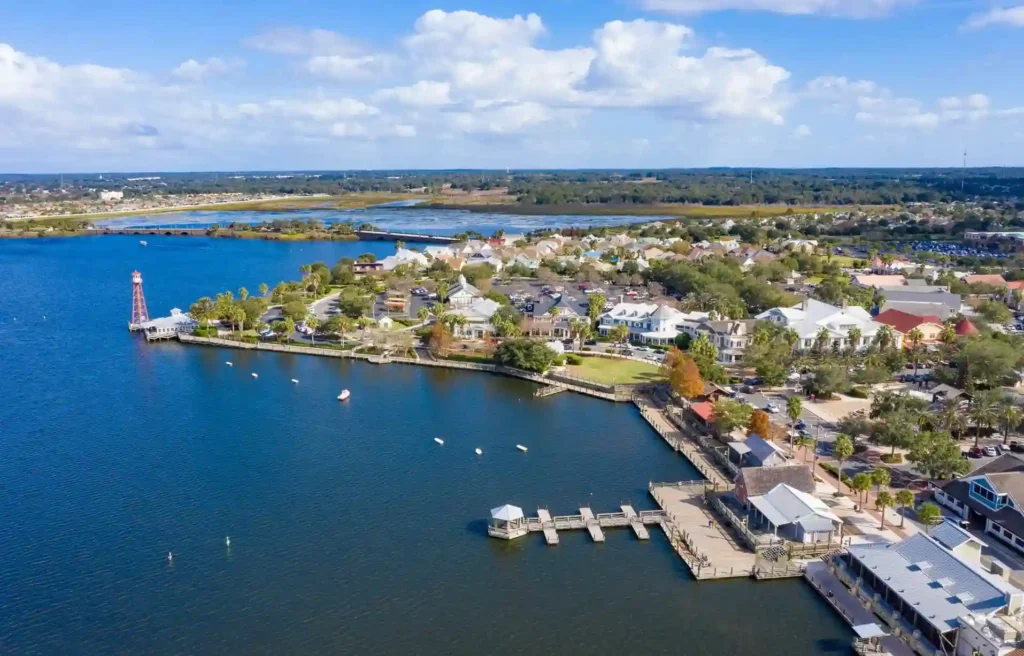
2. The Villages, Florida
The Villages is the largest age-restricted retirement community in the United States. It spans Lake, Sumter, and Marion counties in central Florida. It was purpose-built for retirees, and that shows in everything from golf cart infrastructure to the density of recreation centers.
To begin, Florida does not charge a state income tax. Consequently, Social Security, pensions, and 401(k) or IRA withdrawals remain free from state tax. In turn, this can be a major advantage over states that tax retirement income.
Pros – Residents pay no state income tax on retirement income. Additionally, the community offers many clubs and activities. Meanwhile, golf cart paths connect much of the area. Finally, UF Health The Villages Hospital is located within the community.
Cons – To start, Florida property insurance costs have risen sharply because of hurricane risk. Beyond that, the community’s 55+ age restriction may not suit retirees who want younger neighbors or extended visits from grandchildren. On the other hand, its structured, master-planned setting may not appeal to everyone.
Verdict – Best for retirees seeking a turnkey, activity-rich community. It is also among the best places for Americans to retire for tax-free retirement income, despite insurance uncertainty.
3. Greenville, South Carolina
Greenville has changed significantly over the past 15 years. Once a textile manufacturing hub, it is now one of the Southeast’s more walkable mid-sized cities. In particular, its revitalized downtown runs along the Reedy River. Meanwhile, South Carolina fully exempts Social Security benefits from state income tax.
Additionally, taxpayers age 65 and older can deduct up to $10,000 in other qualifying retirement income each year. According to the South Carolina Department of Revenue, they may also claim a separate $15,000 age-65 deduction against any South Carolina income.
Pros – First, Greenville offers a genuinely walkable downtown centered around Falls Park. It also has Prisma Health’s Greenville Memorial Hospital, a major regional medical center. Additionally, retirees benefit from lower living costs and a growing arts and food scene.
Cons – Summers in the area are hot and humid. Meanwhile, rapid growth has raised home prices in desirable neighborhoods near downtown. Additionally, limited public transit outside the downtown core makes a car almost necessary. These factors may make it less appealing than other best places for Americans to retire.
Verdict – A strong middle-ground choice for retirees who want Sunbelt affordability and a walkable downtown. It offers a smaller scale and lower cost than Charlotte or Atlanta.

4. Lancaster, Pennsylvania
Lancaster sits in the heart of Pennsylvania Dutch Country and offers a combination of historic small-city character and genuinely strong retiree tax treatment. According to the Pennsylvania Department of Revenue, the state does not tax Social Security benefits. Additionally, IRA and 401(k) distributions are not taxed. Likewise, pension income is exempt after reaching the plan’s qualifying retirement age.
Meanwhile, other income is taxed at a flat 3.07% rate. As a result, Pennsylvania offers one of the more retiree-friendly tax structures among states with an income tax.
However, the pension exemption depends on when distributions begin. Payments taken before a plan’s qualifying retirement age may still be taxable. Therefore, retirees receiving pension income should review their plan’s specific terms. They should not assume that a blanket exemption applies.
Pros – Pennsylvania does not tax Social Security benefits. It also exempts IRA and 401(k) distributions from state tax. Additionally, Lancaster has a historic and highly walkable downtown. Penn Medicine Lancaster General Health is based in the city, while home prices remain below the national median.
Cons – Winters are colder and snowier than in most other places on this list. Additionally, Pennsylvania levies an inheritance tax on most heirs other than a spouse. Meanwhile, the rural surroundings offer fewer big-city amenities nearby. As a result, it may feel less convenient than a metro-adjacent retirement destination.
Verdict – A tax-friendly choice for retirees seeking lower taxes. It also offers walkability, strong healthcare, and four seasons.

5. Boise, Idaho
Boise has drawn retirees and remote workers alike over the past decade, combining mountain-adjacent outdoor access with a genuinely functional mid-sized downtown. Idaho fully exempts Social Security benefits from state taxation, though pension and 401(k)/IRA income is taxed at the state’s flat rate.
Pros – Direct access to the Boise River Greenbelt for walking and biking, a regional hub for St. Luke’s Health System, low violent crime relative to comparably sized cities, and four distinct seasons without the most severe winters of states further north or east.
Cons – Home prices have risen quickly as the metro area has grown, the state does tax non-Social-Security retirement income at a flat rate, and the city’s increasing popularity has pushed it well past “hidden gem” status, with more competition for desirable neighborhoods.
Verdict – A strong fit for retirees prioritizing outdoor access and a functional, growing mid-sized downtown who don’t need the rock-bottom cost of living available in some Southern alternatives.

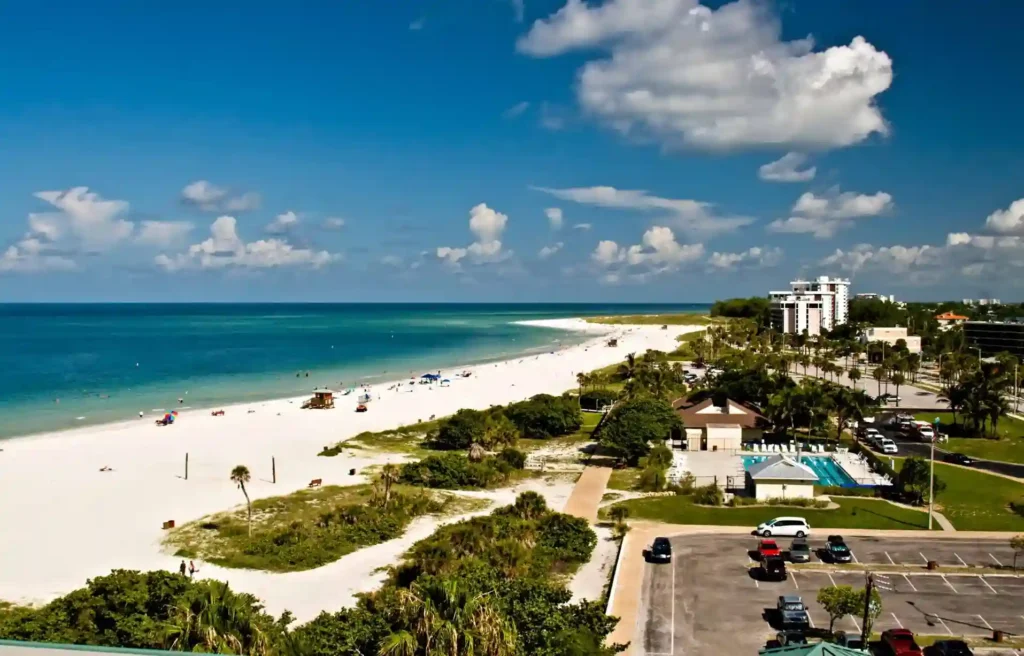
6. Sarasota, Florida
Sarasota sits on Florida’s Gulf Coast and has built a reputation distinct from The Villages: a more traditional small-city environment with a serious arts community (the Sarasota Opera, Ringling Museum of Art) alongside its beaches, rather than a purpose-built retirement campus. As with the rest of Florida, there’s no state income tax of any kind.
Pros – Sarasota is among the best places for Americans to retire for those seeking tax-free retirement income, arts, healthcare, and coastal living. The city has no state tax on retirement income, a strong arts and culture scene, and Sarasota Memorial Hospital, a well-regarded regional medical center. Gulf Coast beaches also add to its appeal.
Cons – Hurricane risk and the associated property insurance costs are a genuine consideration, summer heat and humidity are significant, and the most desirable coastal neighborhoods command a real premium over inland Florida alternatives.
Verdict – Best suited to retirees who want Florida’s tax advantages and beach access alongside an established arts scene, and who’ve already priced in the realities of coastal insurance costs.
7. Chattanooga, Tennessee
Chattanooga has transformed its riverfront and downtown core over the past two decades, building one of the country’s most widely cited municipal fiber internet networks alongside a genuinely walkable city center along the Tennessee River. Tennessee has no state income tax at all, meaning Social Security, pensions, and 401(k)/IRA withdrawals are all untouched at the state level.
Pros – Zero state income tax on any income source, a walkable riverfront downtown, Erlanger Health System is a major regional academic medical center, and a lower overall cost of living than most other entries on this list.
Cons – Tennessee’s combined state and local sales tax rate is among the highest in the country, which matters more for retirees on a tight monthly spending budget than it does for those whose costs are concentrated in housing and healthcare, and summer humidity is significant.
Verdict – A strong value pick among the best places for Americans to retire for those who want zero income tax and a walkable small city. The tradeoff is a higher sales tax burden on everyday purchases.

Also read – Retirement Withdrawal Bucket Strategy That Guards Wealth
8. Fayetteville, Arkansas
Fayetteville is one of the best places for Americans to retire in the broader Northwest Arkansas metro area, alongside Bentonville and Springdale. Significant Walton family investment has helped create cultural amenities, including the Crystal Bridges Museum of American Art in nearby Bentonville, that exceed what the region’s size might suggest.
Arkansas also fully exempts Social Security from state tax and offers a deduction for other qualifying retirement income.
Pros – A genuinely low cost of living relative to the amenities available, the University of Arkansas brings college-town energy and continuing-education access, Washington Regional Medical Center serves as the area’s primary hospital, and the surrounding Ozark Mountains offer substantial outdoor recreation.
Cons – The metro area’s rapid growth has pushed crime statistics in some categories above the national average in certain neighborhoods, summers are hot, and the region’s relative remoteness from a major airport hub means travel to see family elsewhere in the country can require a connection.
THE RELO.AI DAILY NEWSLETTER
Daily Digest of Relocation News, Deals & Reviews
Subscribe for free and get proven relocation and travel strategies, personalized support, valuable rewards, and trusted reviews for every move.
Thank you for subscribing!
Your email has been added to our list.
Verdict – One of the strongest value plays on this list for retirees willing to trade big-city proximity for an unusually high concentration of cultural amenities at a genuinely low cost of living.

9. Scottsdale, Arizona
Scottsdale sits in the Phoenix metro area and has long been a magnet for retirees seeking warm, dry winters, an extensive golf infrastructure, and a higher-end retail and dining scene than most other Sunbelt alternatives.
Arizona is among the best places for Americans to retire for tax-conscious households. It fully exempts Social Security benefits from state taxation. Additionally, Arizona applies a flat 2.5% individual income tax rate to other income, according to the Arizona Department of Revenue.
Pros – A low flat income tax rate combined with a full Social Security exemption, an extensive network of golf courses and resort-style amenities, HonorHealth and Mayo Clinic Arizona both maintain a significant presence in the area, and winters are mild and dry.
Cons – Summer heat is extreme, with stretches of consecutive days above 110°F; home prices in Scottsdale specifically run well above the Phoenix metro average, and water availability is a long-term regional consideration that periodically surfaces in state policy discussions.
Verdict – A strong choice for retirees who prioritize warm, dry winters and resort-style amenities, are comfortable paying a premium for the Scottsdale name specifically (versus a more affordable Phoenix suburb), and don’t mind staying indoors during peak summer heat.

10. Newport, Rhode Island
Newport stands out among the best places for Americans to retire for its coastal New England character. It offers a historic downtown, sailing culture, and easy access to Boston and New York for family visits.
According to the Rhode Island Division of Taxation, the state’s Social Security exemption has three requirements. Retirees must reach full retirement age and meet income limits to qualify. As a result, those who claim benefits early or exceed the income threshold may owe state tax on part of their Social Security.
Although the governor’s recent budget proposed phasing out the tax, it remains a proposal rather than current law.
Pros – A walkable, historic downtown with genuine architectural character, direct rail and highway access to Boston and New York for family visits, Newport Hospital provides local care with Rhode Island Hospital in Providence available for more complex needs, and the sailing and coastal recreation scene is well established.
Cons – Rhode Island is one of the relatively small number of states that still taxes Social Security benefits above certain income thresholds, the cost of living is meaningfully higher than every other entry on this list, and winters are genuinely cold with regular nor’easter exposure.
Verdict – Best suited to retirees prioritizing proximity to East Coast family and coastal New England character over tax efficiency or cost of living, and who’ve confirmed their specific income situation against Rhode Island’s Social Security exemption thresholds before committing.

Comparing the Best Places for Americans to Retire at a Glance
First, this comparison gives you a quick view of the 10 best places for Americans to retire. Next, it highlights costs, taxes, healthcare, climate, and lifestyle. However, every retiree has different needs and budgets.
Therefore, use the table to narrow your options before exploring each destination in detail.
| City | State Tax on Social Security | Cost of Living vs. National | Best For |
| Asheville, NC | No | Above average | Arts, mountains, four seasons |
| The Villages, FL | No (no state income tax) | Average | Turnkey retirement community |
| Greenville, SC | No | Below average | Walkable Sunbelt downtown |
| Lancaster, PA | No | Below average | Tax efficiency, historic character |
| Boise, ID | No | Above average | Outdoor access, mountain West |
| Sarasota, FL | No (no state income tax) | Above average | Coastal living, arts scene |
| Chattanooga, TN | No (no state income tax) | Below average | Zero income tax, riverfront |
| Fayetteville, AR | No | Well below average | Best overall value |
| Scottsdale, AZ | No | Above average | Warm, dry winters, golf |
| Newport, RI | Yes, above certain thresholds | Well above average | East Coast family proximity |
For households who’d rather model their own specific numbers than rely on general cost-of-living comparisons, Relo.AI’s retirement planning calculator factors in actual savings, expected Social Security income, and destination-specific costs to produce a household-level estimate rather than a national average.
Retirement Income and Taxes – What Actually Matters
The tax comparisons above focus specifically on Social Security and retirement account withdrawals because that’s where the most consequential state-by-state variation exists.
According to the IRS, up to 85% of Social Security benefits can be subject to federal tax depending on a household’s combined income, a rule that applies identically regardless of which state a retiree calls home. State tax treatment is a separate layer on top of that federal baseline, and it’s the layer that actually changes when a retiree relocates.
Property tax and sales tax also deserve a look beyond income tax alone. A state with no income tax, like Tennessee or Florida, sometimes makes up the difference with a higher sales tax rate, which matters more for retirees whose monthly spending is concentrated in everyday purchases than for those whose costs are dominated by housing and healthcare.
Several cities on this list, including Lancaster and Greenville, may rank among the best places for Americans to retire partly because their states offer property tax relief for residents age 65 and older.
Before making a final decision, confirm eligibility directly with the relevant county assessor’s office.
Retirees who’d rather not navigate residential property tax mechanics and timing on their own may also want to look into Relo.AI’s incentives and rebates guidance, which surfaces state and local programs that aren’t always obvious from a state revenue department’s general website, or work directly with a vetted agent through Relo.AI’s broker connections program, since local agents are often the fastest route to understanding which specific neighborhoods carry favorable assessments.
Domestic Retirement vs. Retiring Abroad
Every destination on this list is among the best places for Americans to retire because it keeps retirees within the U.S. healthcare and Medicare system. That continuity is a major reason many Americans choose a domestic move over retiring abroad.
For households specifically weighing the cost advantages of moving abroad against the Medicare and healthcare continuity tradeoffs that come with it, Relo.AI’s deeper coverage of countries offering affordable healthcare for retirees and the risks outlined in the Golden Visa healthcare trap retirees need to avoid are worth reading before ruling an international move in or out entirely.
Financing the Move to the Best Places for Americans to Retire and Maximizing Relocation Spend
Relocation itself, whether across the state or across the country, comes with real costs: moving services, temporary housing, closing costs on a new home, and the incidental spending that comes with furnishing and settling into a new place.
Retirees who put a meaningful share of that spend on the right rewards card can offset a real portion of those costs.
Relo.AI’s retiree’s guide to credit cards when relocating walks through which card categories tend to make the most sense for one-time, high-spend moving expenses specifically, as opposed to everyday categories like groceries or gas.
For a broader view of household retirement planning beyond the relocation decision itself, Relo.AI’s guide on how to create your own retirement plan from the ground up covers the sequencing questions, savings withdrawal order, and healthcare bridge planning that matter regardless of which of the 10 cities above ends up being the final choice.
Recommended read – The Future of Retirement Isn’t Saving — It’s Relocating
THE RELO.AI DAILY NEWSLETTER
Daily Digest of Relocation News, Deals & Reviews
Subscribe for free and get proven relocation and travel strategies, personalized support, valuable rewards, and trusted reviews for every move.
Thank you for subscribing!
Your email has been added to our list.
Frequently Asked Questions (FAQ) About the Best Places for Americans to Retire
1. What is the single best place for Americans to retire in 2026?
There is no single best place to retire. The right choice depends on your tax situation, climate preferences, and proximity to family. Fayetteville, Arkansas, offers strong value for cost-conscious retirees. Meanwhile, The Villages, Florida, suits those seeking a fully built retirement community with no state tax on retirement income.
2. Which states don’t tax Social Security benefits?
As of the 2026 tax year, 42 states plus Washington, D.C., don’t tax Social Security benefits at all. Only Colorado, Connecticut, Minnesota, Montana, New Mexico, Rhode Island, Utah, and Vermont still tax it in some form, and most provide income-based exemptions that mean many retirees in those states pay little or nothing on their benefits specifically.
3. Is it better to retire in a state with no income tax at all?
Not automatically. When comparing the best places for Americans to retire, states with no income tax, such as Florida and Tennessee, may have higher sales or property taxes. These costs can offset income tax savings depending on a household’s spending pattern. The right comparison considers the total tax burden, not income tax alone.
4. How much should a retiree budget for relocation itself?
Relocation costs vary significantly based on distance, the size of the household, and whether a full-service mover or a more limited DIY approach is used.
Plan Your Ideal Retirement Destination With Relo AI
Choosing among the best places for Americans to retire is only the first step. However, the real challenge is turning a destination list into a practical retirement move plan.
At Relo AI, we help retirees compare locations, estimate housing costs, organize moving timelines, and make informed decisions before buying a home or signing a lease.
Our retirement relocation planning considers your income, taxes, healthcare needs, budget, preferred climate, and proximity to family.
We also help you account for details that are easy to overlook, including property insurance, local transportation, senior services, temporary housing, and moving costs.
Book a FREE strategy call with us to plan your ideal retirement destination and next move.
You can also call +1-617-333-8453 for relocation guidance.
Bring It All Together!
The best retirement destination depends on your budget, tax situation, healthcare needs, preferred climate, and proximity to family. A lower cost of living may matter more to one household, while another may prioritize walkability, cultural amenities, or year-round warmth. Ultimately, the best places for Americans to retire are the ones that support your lifestyle without putting unnecessary pressure on your long-term finances.
Before making a move, compare local housing, taxes, insurance, healthcare access, and everyday costs based on your own retirement income.
This article reflects state tax policy and cost-of-living data as of the 2026 tax year. State tax laws change periodically; readers should confirm current rules directly with the relevant state department of revenue before making a relocation decision based on tax treatment alone.