

There comes a moment when people quietly accept that the world no longer runs on the assumptions they once trusted. Borders now shift like gates moved by fast-changing politics. Those who pay attention, from professionals to retirees, begin to notice the same pattern. Stability stops being predictable, and mobility turns from aspiration into insurance. New Zealand enters the conversation through quiet steadiness. In a reactive world, it remains one of the few places largely untouched by noise. For many people evaluating long-term options, New Zealand Investor Visa Citizenship is not a backup plan.
It becomes the rational response to a world that rewards those who diversify their risk early rather than respond late.
How Distance Shapes the Strategic Appeal of the New Zealand Investor Visa Citizenship
Distance once seemed like an inconvenience, a detail that kept New Zealand far from global centers. Over time, it has taken on a different meaning. Now, it functions as insulation. The country sits in a rare space, advanced enough to offer modern amenities yet remote enough to avoid the geopolitical tension, financial shock, and social volatility that unsettle other regions.

Subscribe for free and get proven relocation and travel strategies, personalized support, valuable rewards, and trusted reviews for every move.
Your email has been added to our list.
As a result, New Zealand stands outside the main points of global friction. This makes it one of the few jurisdictions less influenced by the turbulence felt elsewhere. Analysts mention this quietly, although the data is precise. Nations near high-conflict zones face visa disruptions and rapid regulatory swings.
New Zealand’s investor visa has received 452 applications, covering about 1,449 people under the new 2025 settings, with a minimum investment requirement of roughly NZD 2.6 billion (Immigration).
In the first weeks after launch, the revamped investor visa attracted 44 applications and at least NZD 260 million in pledged investments, signaling robust early demand (Imidaily).
Countries pulled into global power competition see those pressures shape domestic policy. New Zealand has avoided most of these patterns, which is part of the reason the New Zealand Investor Visa Citizenship attracts long-term planners.
For people looking for a durable foundation, a place suited for plans that stretch across decades, distance is not a weakness. It becomes the quiet element that keeps everything steady.

Related – New Zealand Visa Waiver Explained: Who’s Eligible and How to Apply
Why Traditional Safe Havens Cannot Offer the Same Long-Term Predictability
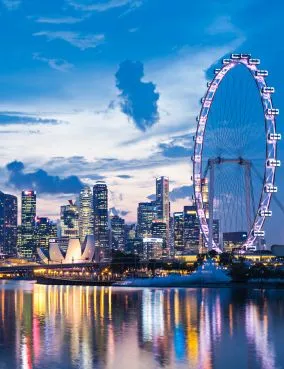
The familiar safe havens still function, but they are no longer unshakeable. Switzerland continues to project order, although its financial neutrality is shaped by global oversight. At the same time, Singapore (read our complete city guide here) operates with remarkable discipline, yet its position within a sensitive region adds a level of risk that remains present. Dubai shows economic strength, although its surroundings move with rapid geopolitical change.
By contrast, New Zealand holds a quieter advantage. It does not aim to outperform the world. Instead, it succeeds by avoiding entanglements that push countries into reactive policy. Its stability is not a branding exercise.
It is the product of a political culture that avoids sudden moves and continues at a steady pace even as global systems become unpredictable, which is why the New Zealand Investor Visa Citizenship appeals to those who prefer long-term certainty.
Consequently, this consistency is what people observe when they compare countries not through lifestyle, but through reliability and long-term safety.
The appeal is continuity. And in this climate, continuity is a luxury.
How New Zealand Investor Visa Citizenship Reflects the Country’s Political Moderation as a Strategic Asset
You can judge a nation by the reliability of its governance, especially if you plan to use it as a second residency. The strength is rooted not in party leadership but in the tone of the political structure. New Zealand scores 1.36 on the World Bank political stability index (on a scale from −2.5 to 2.5), compared with a global average of about -0.06, placing it among the world’s most stable democracies (The Global Economy).
New Zealand operates through consensus, prudence, and slow, deliberate growth. Such qualities were long viewed as plain. For years, they made the country seem slow and predictable. With time, this restraint has revealed itself as a strategic advantage.
Moreover, the country avoids reinventing policy as a reflex to headlines. It refuses to use immigration as a political tool. It also avoids rewriting rules in ways that disrupt long-term planning. This level of predictability matters for people who want a life that is not shaped by sudden policy shocks.
It matters for families who plan careers and education, for individuals building remote or location-flexible work lives, and for investors seeking protection from abrupt regulatory shifts.
Consequently, for many individuals, this is the reason the New Zealand Investor Visa Citizenship feels like more than a legal status. It feels like an environment that allows them to plan in peace.
Also read – Sunrises Hit Different When You’ve Got a New Zealand Golden Visa
Why Environmental Reliability Is Quietly Replacing Tax Policy as a Key Mobility Driver
For a long time, people selected countries based on tax incentives, economic opportunity, or market access. Yet a noticeable shift is unfolding. As climate pressures intensify and infrastructure in major regions strains under population density and industrial stress, environmental reliability has become a decisive factor for families thinking generationally.
Moreover, New Zealand remains one of the most stable environments. It holds clean air, reliable water, steady agriculture, and a moderate climate. These are not surface-level traits. They shape health, longevity, and a form of stability that financial incentives cannot replace.
It ranks highly for environmental health, scoring 82.1 for Environmental Health and 83.0 for Air Quality, reflecting the importance of clean air for long-term health and quality of life (EPI).
Consequently, people rarely lead with environmental reasoning when explaining why they pursue New Zealand Investor Visa Citizenship, but once a decision is made, these factors often sit near the center of the choice.
Subscribe for free and get proven relocation and travel strategies, personalized support, valuable rewards, and trusted reviews for every move.
Your email has been added to our list.
It reflects a deeper instinct, one that acknowledges that many countries cannot guarantee the basics in the decade ahead.
Why Predictable Regulation Benefits Everyone, Not Just High Net Worth Movers
Regulatory stability may sound like a technical detail until you experience the opposite. Sudden border changes, shifting residency rules, and inconsistent enforcement disrupt ordinary lives as strongly as financial lives. As a result, people relocating today are not always seeking an advantage. Many are simply seeking a government that behaves consistently enough to support a long-term plan.
Additionally, New Zealand’s rules evolve at a careful and transparent pace. This supports a broad group, from investors to families and retirees. Predictable governance allows people to plan with confidence. It allows people to move from reacting to planning.
In turn, New Zealand Investor Visa Citizenship has become a practical choice for individuals who want stability without constantly negotiating with their environment.
Why People Are No Longer Moving for Opportunity but Moving for Optionality
Opportunity once defined relocation. People moved to pursue higher salaries, stronger markets, or faster career trajectories. Yet opportunity today is dispersed and digital. Work moves with people, and life no longer needs to remain anchored to a single city to stay productive.
In addition, what people want now is optionality, the ability to reposition their lives without institutional resistance. It is the freedom to choose where to raise children, where to build the next decade, and where to retire without fear that essential systems will break under political or economic strain.
Optionality has become a new form of stability. It cannot be established overnight, and it cannot be constructed after stability starts to fade.
Furthermore, New Zealand does not rely on loud promises of opportunity. It offers something quieter, the conditions where opportunity continues even as global systems falter.
Recommended read – Moving to New Zealand from America is Made Simple with These Practical Steps
How Timing Shapes Outcomes for New Zealand Investor Visa Citizenship Applicants
There is a consistent pattern across all mobility programs. The earliest participants experience clearer pathways and simpler requirements. As interest expands, requirements climb, processing delays grow, and governments refine eligibility to maintain control. In turn, by the time most people notice the opportunity, the access point has narrowed.
Furthermore, those who obtained second residencies before 2020 experienced the next few years with fewer obstacles. Individuals who secured mobility options earlier than 2023 handled global volatility with broader choices. Early movers hold an advantage because they prepare for the outcomes that crises bring to the surface.
Consequently, hesitation carries a cost. Access rarely remains static, and governments seldom expand pathways once demand surges.
Those pursuing New Zealand Investor Visa Citizenship now are acting during a period when the door remains open, the criteria remain clear, and the process remains manageable. Such conditions seldom endure.
Subscribe for free and get proven relocation and travel strategies, personalized support, valuable rewards, and trusted reviews for every move.
Your email has been added to our list.
In a Nutshell
Mobility programs shift faster than most people expect. Costs rise, eligibility tightens, and governments reduce access with little warning. Stability feels like a baseline, although access is always the first thing to change. The question is not if New Zealand will remain stable, but if entry will stay as straightforward, especially for those viewing the New Zealand Investor Visa Citizenship as a long-term anchor.
People do not seek secondary jurisdictions out of mistrust. They do it because stability behaves like a diminishing asset in a volatile world. Five years from now, those who acted will see their choice as foresight.
Those who wait will realize that opportunities often close quietly long before they close publicly.
Why Relo.AI Is the Right Partner As You Choose to Move with Intelligence
Relocation is often simplified in theory, yet anyone who has gone through it knows the process carries weight. It requires timing, planning, and fluency in the rules that shape each stage. Poor execution creates setbacks and emotional strain.
Relo.AI views relocation as strategic planning. Their method centers on clarity, accuracy, and foresight, the qualities that shape a successful transition into a new jurisdiction. They reduce complexity, communicate with precision, and manage the details that many people only discover after something has already gone wrong.
If New Zealand is part of your long-term plan, Relo.AI makes the transition feel deliberate rather than improvised. Stability comes not from the move itself but from guidance aligned with your timing and your goals.
Set up a FREE consultation call with us and move forward with a plan shaped by clarity and guidance that prevents costly mistakes.