
Jobs That Offer Relocation Assistance Pay You to Start Fresh Anywhere - Relocation
AI Workers Are the New Expats: Where Tech’s Hottest Talent Is Landing - Relocation
How to Find a Job in Miami and Thrive in the Sunshine State - Relocation
Athletic Trainers Relocation - Athletics
Doctor Relocation Timeline From Offer Letter to Hospital Onboarding - Medical
Top Cities for Female Physicians to Practice in the United States - Medical
Easy Relocation for Physicians - Medical
The Best Cities for Registered Nurses: Where Pay Meets Possibility - Medical
How Relocation Packages for Nurses Support Long-Term Career Moves - Medical
Relocating as a Traveling Nurse - Medical
10 Best Neobanks in the US That Fit Modern Financial Habits - Personal Finance
Corporate Credit Card vs. Business Credit Card: Which Option Is Appropriate for Business - Finance
Jobs That Offer Relocation Assistance Pay You to Start Fresh Anywhere - Relocation
AI Workers Are the New Expats: Where Tech’s Hottest Talent Is Landing - Relocation
How to Find a Job in Miami and Thrive in the Sunshine State - Relocation
Athletic Trainers Relocation - Athletics & Sports
Doctor Relocation Timeline From Offer Letter to Hospital Onboarding - Medical
Top Cities for Female Physicians to Practice in the United States - Medical
Easy Relocation for Physicians - Medical
The Best Cities for Registered Nurses: Where Pay Meets Possibility - Medical
How Relocation Packages for Nurses Support Long-Term Career Moves - Medical
Relocating as a Traveling Nurse - Medical
10 Best Neobanks in the US That Fit Modern Financial Habits - Personal Finance
Corporate Credit Card vs. Business Credit Card: Which Option Is Appropriate for Business - Finance
Jobs That Offer Relocation Assistance Pay You to Start Fresh Anywhere - Relocation
AI Workers Are the New Expats: Where Tech’s Hottest Talent Is Landing - Relocation
How to Find a Job in Miami and Thrive in the Sunshine State - Relocation
Athletic Trainers Relocation - Athletics & Sports
Doctor Relocation Timeline From Offer Letter to Hospital Onboarding - Medical
Top Cities for Female Physicians to Practice in the United States - Medical
Easy Relocation for Physicians - Medical
The Best Cities for Registered Nurses: Where Pay Meets Possibility - Medical
How Relocation Packages for Nurses Support Long-Term Career Moves - Medical
Relocating as a Traveling Nurse - Medical
10 Best Neobanks in the US That Fit Modern Financial Habits - Personal Finance
Corporate Credit Card vs. Business Credit Card: Which Option Is Appropriate for Business - Finance
Jobs That Offer Relocation Assistance Pay You to Start Fresh Anywhere - Relocation
AI Workers Are the New Expats: Where Tech’s Hottest Talent Is Landing - Relocation
How to Find a Job in Miami and Thrive in the Sunshine State - Relocation
Athletic Trainers Relocation - Athletics & Sports
Doctor Relocation Timeline From Offer Letter to Hospital Onboarding - Medical
Top Cities for Female Physicians to Practice in the United States - Medical
Easy Relocation for Physicians - Medical
The Best Cities for Registered Nurses: Where Pay Meets Possibility - Medical
How Relocation Packages for Nurses Support Long-Term Career Moves - Medical
Relocating as a Traveling Nurse - Medical
10 Best Neobanks in the US That Fit Modern Financial Habits - Personal Finance
Corporate Credit Card vs. Business Credit Card: Which Option Is Appropriate for Business - Finance


San Francisco and Denver sit at opposite ends of the relocation spectrum. One commands Bay Area salaries and Bay Area price tags; the other offers a mountain-city pace with a thriving tech job market and rent that does not consume 60% of your paycheck. For professionals moving from San Francisco to Denver, the financial math alone shows a 28–31% cost reduction that makes the move worth serious consideration.
But numbers on a spreadsheet don’t capture the full picture.
This guide unpacks the real costs, salary expectations, housing realities, and lifestyle trade-offs of moving from San Francisco to Denver.
What’s the True Cost of Living Difference Between San Francisco and Denver?
San Francisco costs about 28% to 31% more than Denver. The exact gap depends on your lifestyle, rent, family size, and daily spending. Still, the main point is clear. Denver gives many people more room in their monthly budget.

THE RELO.AI DAILY NEWSLETTER
Daily Digest of Relocation News, Deals & Reviews
Subscribe for free and get proven relocation and travel strategies, personalized support, valuable rewards, and trusted reviews for every move.
Thank you for subscribing!
Your email has been added to our list.
If you are moving from San Francisco to Denver, the savings can be easy to see. In many cases, you may need only about 71 cents in Denver for every dollar you spend in the Bay Area. That can make a big difference over a full year.
For example, you may need about $10,254.80 per month in San Francisco to keep the same standard of living that $7,300 can support in Denver. This assumes you rent in both cities.
Housing creates the biggest gap. Homes in San Francisco cost about 113% more than homes in Denver. Utilities are also much higher in the Bay Area, often by about 69%.
Other costs can vary. Some groceries and meals may not always be cheaper in Denver. But Denver often wins on daily travel costs. Parking, car use, and lower traffic can make everyday life feel less expensive.
In simple terms, a couple earning $200,000 in San Francisco may need about $140,000 to $145,000 in Denver to keep a similar lifestyle. That is why the move can feel like a pay raise, even when the salary is lower.
Related – Valuable Tips to Find a Home in Denver
Will Your Salary be Lower in Denver, and by How Much?
Yes, your salary may be lower in Denver. You should plan for that before moving from San Francisco to Denver. Employers in Denver often pay about 18.3% less than employers in San Francisco. For similar roles at strong companies, the gap is real. Still, the full financial picture can work in your favor.
For example, a software engineer earning $150,000 in San Francisco may see Denver offers in the $120,000-$130,000 range. A senior engineer may earn $130,000-$160,000 in Denver, compared with $190,000-$210,000 in the Bay Area.
However, Denver’s lower cost of living can make the salary cut easier to manage. In many cases, the lower salary is offset by cheaper housing, lower daily costs, and reduced transportation expenses. Some projections show that this move could increase disposable income by $9,509 per year.
So, a software engineer who takes a $20,000 salary cut may still gain $15,000-$25,000 in real buying power. This depends on rent, taxes, commute costs, and lifestyle choices.
Tech jobs remain strong in Denver. Companies such as AWS, Google, Palantir, and many venture-backed startups offer solid packages for experienced workers. Nursing, finance, and healthcare roles can also pay well compared with the local cost of living.
How Much Will Housing Cost, and What Neighborhoods Make Sense?
Denver housing is still expensive, but it costs far less than San Francisco. As of mid-2026, the median home price in Denver is close to $600,000. Prices are up about 2–3% year over year, which shows a much slower market than the boom years of 2021 and 2022.
By May 2026, Denver home prices were up 2.5% year over year. The median price was about $635K, with homes selling in about 18 days.
This means Denver is no longer a red-hot seller’s market. It is now closer to a balanced market. In some areas, buyers have more room to negotiate than they did a few years ago.
Denver rents are lower than San Francisco. One-bedrooms cost $1,500–$1,700, and two-bedrooms cost $1,800–$2,200.
The best Denver neighborhood depends on your budget and lifestyle. Cherry Creek and Washington Park are premium areas. Homes often range from $700,000 to $1.2 million. These neighborhoods offer walkability, restaurants, parks, and strong family appeal.
Capitol Hill is a better fit for people who want a younger, more creative area. Homes often range from $500,000 to $700,000. It is also one of the most walkable parts of Denver.
LoHi, or Lower Highlands, has become one of Denver’s fastest-growing neighborhoods. It offers lofts, restaurants, bars, and easy access to downtown. Homes often range from $550,000 to $850,000.
Highlands is near downtown, with schools, parks, and family appeal. Homes cost $600K–$850K, giving buyers moving from San Francisco to Denver better value.
Renters often choose South Pearl, LoDo, and RiNo for dining, nightlife, transit, and city feel. Two-bedroom rents often run $1,600–$2,400.
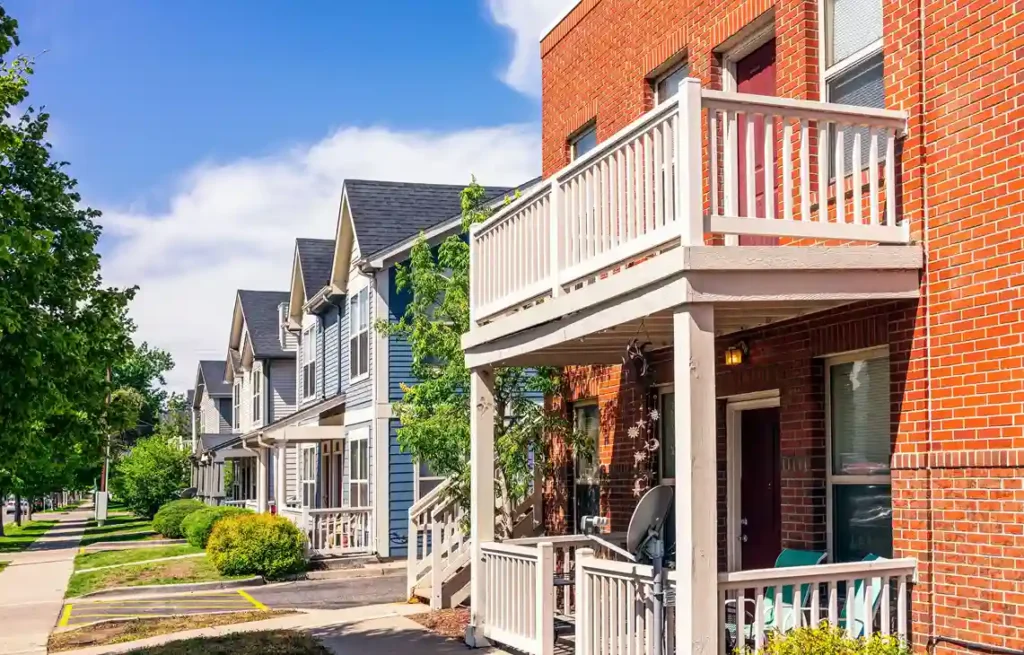
Also read – 7 Tips for Choosing the Right Neighborhood When Buying Your New Home
What are the Real Salary-to-Housing Trade-offs for Different Professions?
Tech workers often get the best financial result. In 2026, the average salary for a software engineer in Denver, Colorado is $99,040. More experienced engineers can earn $125,000–$180,000.
For mid-to-senior tech roles, the typical pay range in Denver is $123,011–$182,513 per year.
That salary can go much further in Denver than it does in San Francisco. A software engineer earning $130,000–$150,000 may qualify for a home around $500,000–$550,000, based on the 28% debt-to-income rule. That budget can buy a solid home in many Denver neighborhoods.
Healthcare workers also have strong options. Denver has a nursing shortage, which has helped push pay above the national median. Many registered nurses earn $65,000–$75,000. Specialized roles, night shifts, and extra hours can raise that number.
Finance and accounting jobs also fit the local housing market better. Many roles pay around $70,000–$110,000. At that level, rent and mortgage costs may feel more manageable than they do in the Bay Area.
The picture is harder for service, sales, and admin workers. These jobs often pay $40,000–$60,000. At that income level, Denver housing can still feel expensive. Many workers may need a second income, a roommate, or a smaller rental budget.
Overall, professionals moving from San Francisco to Denver with tech, healthcare, finance, or accounting skills often see more room in their monthly budget. Service workers may still save compared with San Francisco, but they should not expect Denver housing to feel cheap.
Is Denver’s Job Market Strong When Moving from San Francisco to Denver?
Yes, Denver has a strong job market for many skilled workers. Over the past five years, its tech scene has grown fast. Major companies like Amazon, Google, Palantir, and Microsoft now have engineering teams in the area.
In addition, Denver has seen growth in AI, cybersecurity, aerospace, and fintech. Job openings remain steady for software engineers, data scientists, and cloud engineers. Healthcare is also a strong field. The Denver metro keeps growing, so hospitals and care systems continue to hire.
The local job market is also tight. The metro unemployment rate stays below 4%, which means many skilled roles are still in demand. As a result, professionals moving from San Francisco to Denver may find solid options in tech, healthcare, finance, and business services.
A typical relocation from San Francisco to Denver takes about 60-90 days. First, Weeks 1-2 usually focus on job search and offer talks. Interview cycles often take 3-4 weeks, so it helps to start early.
Next, Weeks 3-4 usually include accepting the offer and setting your start date. Most start dates fall 2-3 weeks after acceptance. Then, Weeks 5-6 can focus on house hunting. Denver homes can move fast, but many buyers can still close in 30-45 days.
After that, Weeks 7-10 are for move planning, temporary housing, and settling in. By day 90, plan to handle schools, banking, healthcare registration, and driver’s license changes when moving from San Francisco to Denver.
Finally, set aside $5,000-$12,000 for moving costs. This may include household goods, travel, deposits, and short-term housing. Your final cost depends on whether you hire full-service movers or manage the move yourself.
What’s the Climate and Lifestyle Difference When Moving from San Francisco to Denver?
Denver feels very different from San Francisco. The city gets about 300 sunny days each year, while San Francisco is often cool, gray, and steady. In Denver, summers usually reach 85-90°F with low humidity. Winters often sit around 30-40°F, with some snow. However, most snow melts quickly because the sun returns fast.
As a result, you get real seasons in Denver. Many people moving from San Francisco to Denver enjoy that change. Still, winter can raise your heating costs, so plan for a higher utility bill during colder months.
Another big change is altitude. Denver sits at 5,280 feet above sea level. During your first two weeks, you may notice mild headaches, dry skin, or faster dehydration. Drink more water than usual and give your body time to adjust.
The lifestyle also feels slower. San Francisco often moves at startup speed. Denver has a calmer pace. Restaurants may close earlier, brunch is less intense, and nightlife is not as dense. Even so, the city often feels more relaxed and friendly.
Outdoor life is a major part of Denver’s culture. Hiking, skiing, mountain biking, and rock climbing are normal weekend plans. They are not just occasional trips. Beer culture is also strong, with Denver ranking among the top US cities for craft breweries per person.
Finally, the lower cost of living changes daily life. Many younger professionals can buy homes earlier in Denver than in San Francisco. This often creates a more stable lifestyle, with more focus on homes, families, outdoor plans, and long-term routines.
THE RELO.AI DAILY NEWSLETTER
Daily Digest of Relocation News, Deals & Reviews
Subscribe for free and get proven relocation and travel strategies, personalized support, valuable rewards, and trusted reviews for every move.
Thank you for subscribing!
Your email has been added to our list.
What About Taxes, and Should the State Tax Rate Concern You?
First, the biggest difference is state income tax. Colorado has a flat state income tax of 4.40% for all income levels. California, by comparison, uses a higher progressive tax rate of 9.3% to 13.3% for many higher earners. Federal taxes stay the same no matter which state you live in.
Next, look at property and sales taxes. Property tax in Denver County averages 0.51% each year on assessed value. In California, the average is higher at about 0.76%, though the exact rate depends on the county. Also, Denver’s combined state and local sales tax is 8.31%.
As a result, the savings can be meaningful. A high earner may save 3% to 5% of gross income in state and local taxes after moving to Colorado.
For example, a professional earning $200,000 in San Francisco could save about $12,000 to $18,000 per year in taxes alone.
However, taxes are only one part of the full budget. You should also compare housing, insurance, car costs, utilities, and daily expenses. Even so, the lower state tax burden is one of the clearest financial benefits of moving from San Francisco to Denver.
How Should You Approach the House Hunt, and What Should First-Time Denver Buyers Expect?
Denver’s market moved from seller-dominated to balanced in 2024–2025, meaning buyers have real negotiating power for the first time in five years.
Denver is closer to a balanced market overall, though certain neighborhoods and well-priced homes continue to favor sellers.
Homes taking 45–60 days on the market signal buyer leverage; those selling in 15–20 days signal micro-scarcity.
Work with a local agent when moving from San Francisco to Denver, because Denver operates as a micro-market city; conditions in Cherry Creek differ sharply from Highlands or Highlands Ranch.
Get pre-approved before house hunting-Denver homes move fast in desirable neighborhoods. Set a budget 10–15% below your max approved amount to preserve negotiating room.
Expect multiple offers on turnkey homes in premium locations, but reasonable homes priced slightly below market fetch single offers and inspection negotiations. Inspection contingencies remain standard; appraisal gaps are rare in today’s market.
Read the complete guide about relocating to Denver.
Recommended read – Denver Union Station is a Must-Visit for Travelers and Locals
What Does Your First 90 Days Look Like After You Arrive?
During Days 1-14, focus first on temporary housing. An Airbnb or corporate housing option can make the move feel easier while you learn the city. Then, register your car and update your driver’s license. Colorado requires an in-person visit, so plan 1-2 hours at the DMV.
Next, open a local bank account if needed. If you have children, start the school registration process early. By Days 15-30, your first paychecks may arrive, and your housing search may move faster. At the same time, give yourself time to adjust to the altitude and your new commute.
After that, Days 31-60 are about building a steady routine. Join a gym, climbing gym, or local fitness group. Denver’s outdoor culture is real, and many community gyms also work as social hubs.
On weekends, explore different neighborhoods so you can see where you feel most at home.
Then, Days 61-90 help you settle into daily life. Your routine becomes easier, and social networks begin to form. Most professionals report feeling settled by week 12-14, especially after finding favorite stores, parks, coffee shops, and commute routes.
Finally, use this period to compare your new lifestyle with your old one. Track your rent, commute time, grocery costs, and weekend spending. This helps you see the real value of moving from San Francisco to Denver.
Ready to check your relocation offer? Use the Relo.AI Offer Analyzer to compare your San Francisco and Denver offers side-by-side. Factor in salary, cost of living, taxes, and benefits to see your true financial picture. It takes 2 minutes and accounts for every variable that matters.
Frequently Asked Questions About Moving from San Francisco to Denver
1. Is Denver more affordable than San Francisco for remote workers?
Yes, dramatically. If your salary is tied to a US cost-of-living standard and doesn’t adjust for location, Denver is 28–31% cheaper overall and 40–50% cheaper for housing. For professionals moving from San Francisco to Denver, remote work can turn an SF-level salary into a major lifestyle upgrade. Homeownership becomes feasible, transportation costs drop, and discretionary spending increases. This arbitrage is precisely why thousands have made the move since 2020.
2. Will you get a job offer quickly if I’m relocating from San Francisco to Denver?
Tech roles typically see faster timelines than national averages-3–4 week interview cycles are standard. Healthcare and skilled trades move even faster. The market is tight (sub-4% unemployment), which favors candidates but also means employers are selective. Your SF experience is an asset; demonstrate what you learned and how it transfers to Denver’s less-hyped, more-practical tech culture. Relocating candidates should expect a 6–8 week end-to-end timeline from initial networking to offer letter.
3. What neighborhoods in Denver are comparable to San Francisco neighborhoods?
Cherry Creek mirrors San Francisco’s Mission District with its trendy, walkable atmosphere, high rent, and young professionals. Capitol Hill represents Denver’s version of the Haight or Lower Mission, offering eclectic, artsy vibes with nightlife and mid-range prices. LoHi and Highland appeal to SF residents seeking hipster-industrial charm without the density. Honestly, no Denver neighborhood fully replicates SF’s urban intensity. Denver’s best neighborhoods are walkable but less crowded, more car-friendly (and car-dependent), with stronger neighborhood identity because of lower density. Most SF transplants land in Cherry Creek or Capitol Hill, then realize they prefer the suburban-adjacent feel of Highland or Highland Park after 6 months.
4. Should you buy or rent when moving to Denver from San Francisco?
Denver’s price-to-rent ratio (27x) suggests buying offers long-term equity advantages if you can manage a down payment. However, renting for your first 6 months lets you neighborhood-test before committing to a $600K home purchase. Most professionals who move from SF to Denver rent for 6–12 months, then buy after getting a feel for commute times and neighborhood vibe. This costs $15,000–$30,000 in extra rent but eliminates expensive mistakes. If you’re certain of your job, company, and long-term plans, buying immediately can work-just do it conservatively (20% down, no HELOC mentality).
THE RELO.AI DAILY NEWSLETTER
Daily Digest of Relocation News, Deals & Reviews
Subscribe for free and get proven relocation and travel strategies, personalized support, valuable rewards, and trusted reviews for every move.
Thank you for subscribing!
Your email has been added to our list.
5. What’s the biggest culture shock for San Francisco transplants?
The pace and informality. SF Bay Area professionals are used to venture-capital speed, jargon-heavy conversation, and performative self-promotion. Denver’s tech culture values shipping over talking, practical results over hyperbole. Social scenes are friendlier but less exclusive. Outdoor recreation is a default weekend activity, not an aspirational flex. No one cares where you went to school or what company you work for until conversation warrants it. If you found SF’s intensity exhausting, Denver feels like a relief. If you thrived on it, Denver can feel slow for the first 6 months.
Plan Your San Francisco to Denver Move with Relo.AI
Moving from San Francisco to Denver can look simple on paper, but housing, schools, commute times, moving costs, and job-offer details can quickly change the real value of your relocation.
At Relo.AI, we help you review the full picture. Our relocation calculator and global relocation calculator help you estimate moving costs, while our corporate relocation services and personal relocation services support your next steps before, during, and after the move.
We look beyond the moving truck. Your timeline, household needs, destination area, commute, budget, lifestyle goals, and job-offer details all matter when deciding whether Denver is the right fit.
Book a FREE session with Mac Chinsomboon or call +1-617-333-8453-RELO.
Final Say – Is Moving from San Francisco to Denver the Right Call?
For tech professionals, healthcare workers, and skilled trades, the move merits serious consideration. Almost certainly yes. The salary trade-off is real, but the total financial picture (lower housing, taxes, transportation, and cost of living) overwhelmingly favors Denver for most SF earners. Homeownership shifts from “someday” to “next year.” Your professional network ports well; Denver’s tech community actively recruits from the coasts.
For early-career professionals, service roles, and anyone whose income is tied to SF’s hypergrowth economy, moving from San Francisco to Denver requires thoughtful planning. Denver’s job market is strong but less volcanic; career trajectory may flatten slightly. Salary cuts are proportionally larger; lifestyle gains are still real but less transformative.
The climate, outdoor culture, and lower-stress pace are ancillary benefits, not primary factors. Make the move for the math, stay for the mountains, and adjust your expectations around social speed.
Most SF-to-Denver transplants hit genuine contentment by month 4–6.
Resources –
- Indeed Flex Cost of Living Calculator: San Francisco vs. Denver
- Redfin: Denver Housing Market Report (Current)
- Denver Group: Denver Real Estate Market Report (February 2026)
- Salary.com: Denver vs. San Francisco Salary & Cost of Living
Last updated – July 2026. This guide reflects current market conditions, pricing, and salary data as of July 2026. Real estate markets move quickly; consult local resources for neighborhood-specific or timing-sensitive decisions.