Jobs That Offer Relocation Assistance Pay You to Start Fresh Anywhere - Relocation
AI Workers Are the New Expats: Where Tech’s Hottest Talent Is Landing - Relocation
How to Find a Job in Miami and Thrive in the Sunshine State - Relocation
Athletic Trainers Relocation - Athletics
Doctor Relocation Timeline From Offer Letter to Hospital Onboarding - Medical
Top Cities for Female Physicians to Practice in the United States - Medical
Easy Relocation for Physicians - Medical
The Best Cities for Registered Nurses: Where Pay Meets Possibility - Medical
How Relocation Packages for Nurses Support Long-Term Career Moves - Medical
Relocating as a Traveling Nurse - Medical
10 Best Neobanks in the US That Fit Modern Financial Habits - Personal Finance
Corporate Credit Card vs. Business Credit Card: Which Option Is Appropriate for Business - Finance
Jobs That Offer Relocation Assistance Pay You to Start Fresh Anywhere - Relocation
AI Workers Are the New Expats: Where Tech’s Hottest Talent Is Landing - Relocation
How to Find a Job in Miami and Thrive in the Sunshine State - Relocation
Athletic Trainers Relocation - Athletics & Sports
Doctor Relocation Timeline From Offer Letter to Hospital Onboarding - Medical
Top Cities for Female Physicians to Practice in the United States - Medical
Easy Relocation for Physicians - Medical
The Best Cities for Registered Nurses: Where Pay Meets Possibility - Medical
How Relocation Packages for Nurses Support Long-Term Career Moves - Medical
Relocating as a Traveling Nurse - Medical
10 Best Neobanks in the US That Fit Modern Financial Habits - Personal Finance
Corporate Credit Card vs. Business Credit Card: Which Option Is Appropriate for Business - Finance
Jobs That Offer Relocation Assistance Pay You to Start Fresh Anywhere - Relocation
AI Workers Are the New Expats: Where Tech’s Hottest Talent Is Landing - Relocation
How to Find a Job in Miami and Thrive in the Sunshine State - Relocation
Athletic Trainers Relocation - Athletics & Sports
Doctor Relocation Timeline From Offer Letter to Hospital Onboarding - Medical
Top Cities for Female Physicians to Practice in the United States - Medical
Easy Relocation for Physicians - Medical
The Best Cities for Registered Nurses: Where Pay Meets Possibility - Medical
How Relocation Packages for Nurses Support Long-Term Career Moves - Medical
Relocating as a Traveling Nurse - Medical
10 Best Neobanks in the US That Fit Modern Financial Habits - Personal Finance
Corporate Credit Card vs. Business Credit Card: Which Option Is Appropriate for Business - Finance
Jobs That Offer Relocation Assistance Pay You to Start Fresh Anywhere - Relocation
AI Workers Are the New Expats: Where Tech’s Hottest Talent Is Landing - Relocation
How to Find a Job in Miami and Thrive in the Sunshine State - Relocation
Athletic Trainers Relocation - Athletics & Sports
Doctor Relocation Timeline From Offer Letter to Hospital Onboarding - Medical
Top Cities for Female Physicians to Practice in the United States - Medical
Easy Relocation for Physicians - Medical
The Best Cities for Registered Nurses: Where Pay Meets Possibility - Medical
How Relocation Packages for Nurses Support Long-Term Career Moves - Medical
Relocating as a Traveling Nurse - Medical
10 Best Neobanks in the US That Fit Modern Financial Habits - Personal Finance
Corporate Credit Card vs. Business Credit Card: Which Option Is Appropriate for Business - Finance

Bulgaria rarely headlines global remote-work trends, yet its pull continues to grow. The country attracts professionals who plan beyond short stays. It attracts independent workers seeking legal certainty. It appeals to entrepreneurs who want Europe without excess. At the center of this shift stands the Bulgaria digital nomad visa. Previously treated as a technical workaround, it has matured into a viable long-stay framework by 2026.
People come for predictability, not presentation. A lawful base without lifestyle inflation. Predictable rules without constant visa runs. A European address that supports long-term planning.
Below, you will find what defines Bulgaria’s evolving role as a serious residency option in the European landscape.
What Is the Bulgaria Digital Nomad Visa in 2026?
The Bulgaria digital nomad visa functions within a formal residence system. Applicants begin with a long-stay Type D visa and secure a residence permit after arrival.

THE RELO.AI DAILY NEWSLETTER
Daily Digest of Relocation News, Deals & Reviews
Subscribe for free and get proven relocation and travel strategies, personalized support, valuable rewards, and trusted reviews for every move.
Thank you for subscribing!
Your email has been added to our list.
This option applies to non-EU nationals. Work must be performed remotely for foreign employers or clients. Eligibility depends on stable income and financial independence.
Procedurally, the process has two steps. First, applicants apply for a Type D visa abroad. After arrival, applicants must submit a residence permit request within 14 days. Permits are generally valid for one year. A single renewal is available under the same conditions.
Related – Which Country Offers The Easiest Digital Nomad Visa in Europe? Let’s Find Out
Who Can Apply for the Bulgaria Digital Nomad Visa?
Eligibility focuses on income origin, nationality, and work structure. In addition, applicants must demonstrate financial independence and ongoing remote work arrangements. The framework is designed to support lawful residence without participation in the local labor market.
Applicants must be –
- Citizens of non-EU, non-EEA, and non-Swiss countries
- Employed remotely or self-employed with foreign clients
- Earning income exclusively from outside Bulgaria
Authorities draw a firm line on employment. As a result, living in Bulgaria is allowed, but working locally is restricted.
What Is the Minimum Income Requirement?
Income thresholds are defined with unusual precision.
Applicants must meet a defined income threshold. Specifically, the annual requirement stands at €31,000 or higher. This figure reflects 50 times Bulgaria’s monthly minimum wage. As of 2025, that wage is set at €620.
In practice, this benchmark matters. Applications that fall below it often face delays or refusals, regardless of professional background.
After conversion, the threshold is roughly $36,000 USD per year, placing Bulgaria among the more accessible EU options.
What Does the Bulgaria Digital Nomad Visa Cost?
By European standards, costs stay relatively low, keeping Bulgaria among the more accessible EU residency options.
Two required government fees apply. Initially, applicants pay for the Type D visa at the consulate. Costs generally fall between €100 and €120. Next, a residence permit application follows after arrival. The fee typically falls between €150 and €200.
All required government fees combined usually sit in the €250 to €320 range. Applicants should also budget for ancillary costs that differ by case. These usually cover document translation, legalization, insurance policies, and related administrative services.
These supplementary costs rarely push overall expenses high. In most cases, first-year administrative fees remain under €1,000. Separately, rent and lifestyle spending sit outside this figure. As a result, Bulgaria remains cost-competitive for long-term residence.
How Do Applicants Prove Income?
Income proof must show consistency and foreign origin. In practice, authorities look for clear patterns. This means, documents should show active remote work. Overall, consistency matters.
Accepted documentation commonly includes –
- Bank statements showing regular incoming payments
- Employment contracts with overseas companies
- Client agreements for freelance or consulting work
- Payslips or verified payment confirmations
One Canadian UX designer living in Varna described the review process as “methodical rather than suspicious.” In her case, her application succeeded after submitting six months of bank statements alongside two active client contracts.
What Other Requirements Apply?
Beyond income, the process also includes several standard conditions. In addition, these requirements emphasize compliance, security, and financial readiness. As part of the review, evaluations occur at several stages. Throughout the process, consistency across documents plays an important role in approval.
Applicants must provide –
- Health insurance with minimum coverage of €30,000
- Proof of accommodation, such as a registered lease
- A clean criminal record from the country of residence
- Valid passport and legalized translations of documents
Health insurance and housing proof are checked both at the visa stage and during residence permit issuance.
Also read – Top 10 Digital Nomad Insurance Providers: Protecting Your Global Adventures
How Does the Application Process Work?
The process follows a clear sequence. First, the Type D visa application is submitted at a Bulgarian consulate outside the country. Typically, processing requires four to six weeks.
Next, enter Bulgaria using the approved Type D visa. Then, file a residence permit application within two weeks of arrival.
Finally, the initial permit covers one year, with renewal possible under the same criteria.
How Long Can You Stay Under the Bulgaria Digital Nomad Visa?
The first residence permit is valid for 1 year. After that, extensions are usually granted when requirements continue to be met.
Applicants must sustain the required income level, hold valid health and travel insurance, and maintain registered accommodation. Alongside these, compliance with tax and legal rules is expected.
Over time, periods spent under this status count toward long-term EU residence eligibility, which makes it a practical option for multi-year planning.
THE RELO.AI DAILY NEWSLETTER
Daily Digest of Relocation News, Deals & Reviews
Subscribe for free and get proven relocation and travel strategies, personalized support, valuable rewards, and trusted reviews for every move.
Thank you for subscribing!
Your email has been added to our list.
What Are the Tax Implications?
Tax status depends on physical presence. In general, spending more than 183 days per year in Bulgaria establishes tax residency. Therefore, Bulgaria’s 10% flat personal income tax may apply.
However, individual obligations can vary based on tax treaties and income structure. For this reason, many long-term residents seek professional tax advice before crossing residency thresholds.
Remote workers earning income across borders should review reporting obligations closely. In doing so, early planning reduces double taxation risk and supports cross-border compliance.
Is Bulgaria Part of Schengen in 2026?
Bulgaria’s Schengen integration remains partial. Consequently, some border controls have eased. However, full internal freedom continues to evolve. Meanwhile, the Bulgarian visa grants residence rights.
Even so, standard Schengen travel rules still apply when moving across Europe. For residents, this means travel planning still requires attention to entry rules and length-of-stay limits.
Holding a Bulgarian residence permit allows local stay, but Schengen travel rules still apply elsewhere.
What Are the Advantages and Limits?
The Bulgaria digital nomad visa supports long-term residence through clear requirements and modest costs.
At the same time, its limitations are equally clear. For example, administrative processes remain paper-heavy. Additionally, English-language support varies. In some cases, healthcare quality differs by region.
Overall, for professionals who value stability over spectacle, these trade-offs often feel acceptable.
Recommended read – The 12 Countries That Offer Digital Nomad Visas in 2026
Where Do Digital Nomads Settle in Bulgaria?
Sofia remains the primary destination. It offers international connectivity, coworking spaces, and administrative access.
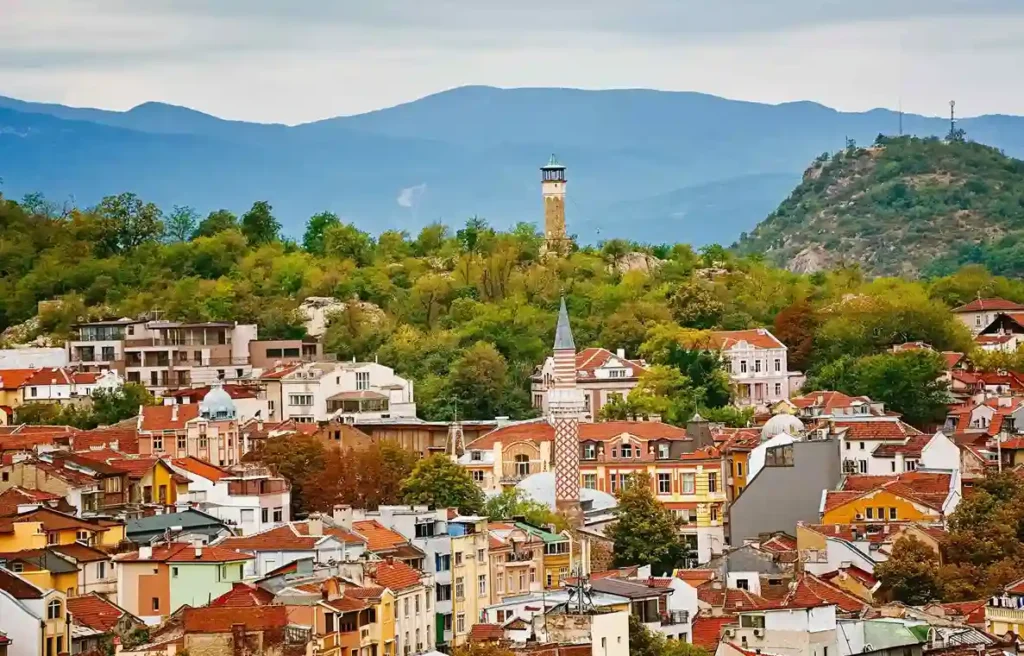
By contrast, Plovdiv appeals to those seeking culture and lower density. Similarly, Varna attracts residents drawn to coastal living. Meanwhile, Bansko has emerged as a seasonal hub.
There, remote professionals combine work with outdoor life. All of these locations support practical living in Bulgaria.
Why Is Bulgaria Gaining Attention From Remote Professionals?
Bulgaria stands out for its cost structure. In addition, it benefits from EU positioning and regulatory certainty. For many professionals, that balance matters.
Living costs in Sofia sit 40–60% below Berlin and Amsterdam (also, you can read our complete city guide here). Plovdiv and Varna offer additional savings. Most regions offer fiber speeds between 300 Mbps and 1 Gbps.
Just as significantly, Bulgaria offers EU residency. It does so without mandating domestic employment or high income thresholds.
Taken together, these factors explain the appeal of the digital nomad visa. Thus, it functions as a practical residency solution.
THE RELO.AI DAILY NEWSLETTER
Daily Digest of Relocation News, Deals & Reviews
Subscribe for free and get proven relocation and travel strategies, personalized support, valuable rewards, and trusted reviews for every move.
Thank you for subscribing!
Your email has been added to our list.
Is the Bulgaria Digital Nomad Visa a Practical Choice in 2026?
For remote workers seeking EU residency without inflated costs, in this context, Bulgaria still offers one of the most grounded options available.
The Bulgaria digital nomad visa does not promise lifestyle branding. Instead, it offers lawful residence, predictable requirements, and a path measured in years.
Ultimately, within a tightening European immigration climate, that practicality carries weight.
Turn a One-Year Permit into a Sustainable Life in Bulgaria
Relo.AI helps location-independent professionals establish a secure foothold in Bulgaria, moving past short stays toward residency built on compliance and clarity.
If you are a digital nomad, consultant, founder, or remote employee, we help you navigate the Bulgaria digital nomad visa. We then help turn it into a long-term residency plan that fits your work and life.
First, we guide you through the correct visa pathway, from the Type D application to residence permit approval. Then, we support you in securing compliant long-term housing that aligns with local registration requirements.
We also help arrange health insurance that meets immigration standards and clarify tax residency rules so there are no surprises after arrival.
Throughout the process, Relo.AI manages the complexity behind the scenes. In turn, you are free to focus on work, integration, and planning your future in Europe.
Book a FREE session and see how settling in Bulgaria can feel structured, secure, and sustainable.
To Sum It All Up!
Europe offers no shortage of short-term visas. Yet the Bulgaria digital nomad visa occupies a different lane. It reduces reliance on visa runs. It replaces uncertainty with defined thresholds and renewals. And it provides something increasingly scarce in Europe, a lawful residence that supports planning beyond the next ninety days. In a region shaped by tightening borders and temporary permits, Bulgaria offers a sense of continuity.
Especially for those who build lives with intention.